

SPF ins & outs

Let’s talk sunscreen, skin protection, FAQs about the sun, and my opinions on all things SPF.
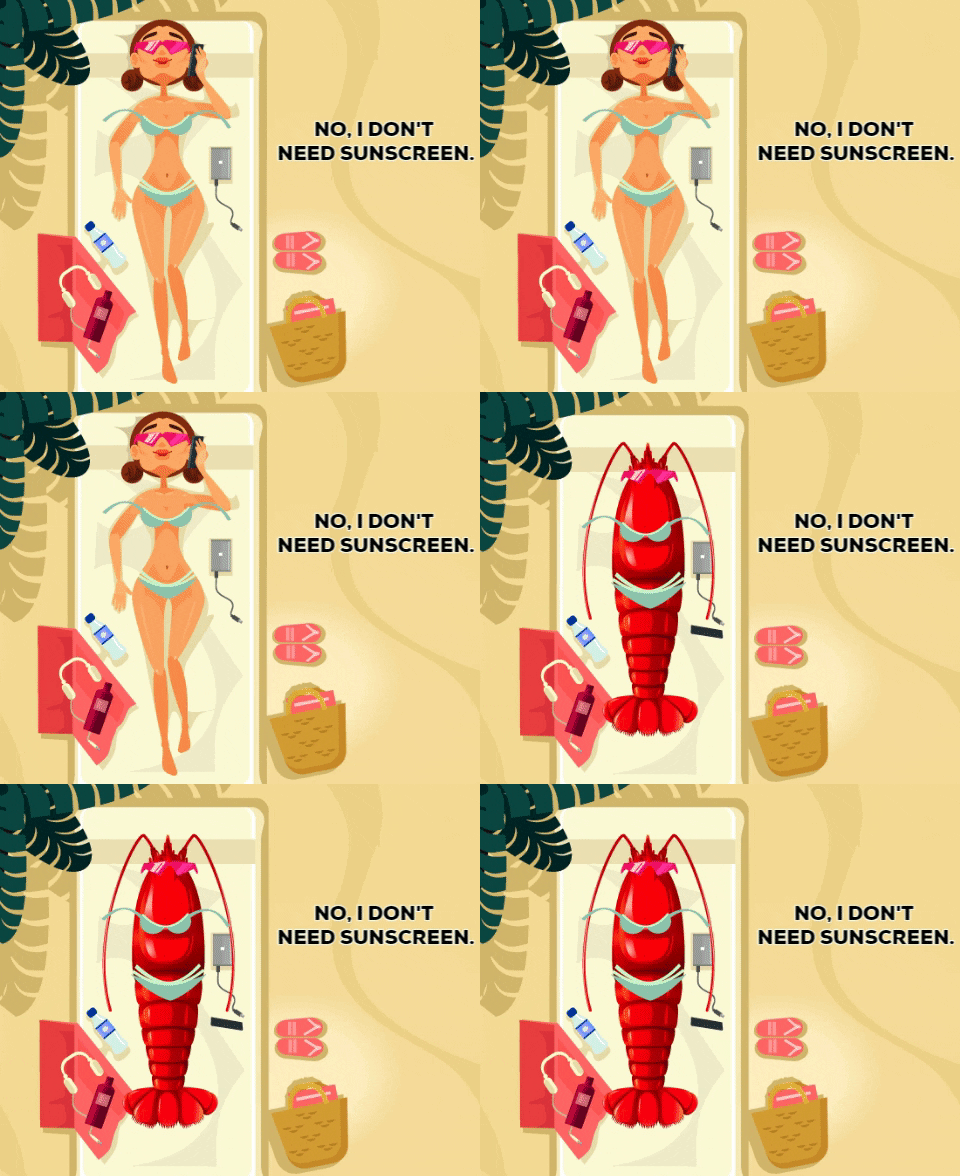
SPF is in, so throw that tanning oil OUT!
I will always proudly be a die hard SPF wearer and supporter. Not only because I don’t want to get skin cancer in my future but also because the sun contributes to many more skin issues than just cancer. Some of these are premature wrinkles, rapid aging, make the skin look dull, and can worsen hyperpigmentation/uneven tone. We’re trying to age like a grape, not a raisin. And don’t get me wrong because I think wrinkles are beautiful and show that you’ve lived life but the sun makes this worse than the natural aging process. Some of these things are already problem areas some clients are treating, so then to not wear sunscreen could exacerbate these problems and push us farther from reaching our skin goals. Trust me I hear the arguments people make as to why they don’t wear sunscreen, “I’m never outside”, “it feels greasy on my skin”, “I haven’t worn sunscreen up till now, why start if I’m fine”, “But I want to be tan!”, “I always need to get burnt to get a base for summer”, but let me talk about a few reasons and situations where we should be protecting our skin, no excuses. (Also psa that might shock you all… tanned skin actually equals damaged skin unless its tan from a bottle.)
First let’s get some background on how the sun affects our largest organ. I always say that the face and neck are the most important to use sunscreen on every single day, however if you’re going to be in the sun and any skin is showing you should have that SPF on. This is because there are two types of UV rays from the sun, UVA and UVB. Johns Hopkins Medicine says the difference is UVA rays are the ones that affect premature aging/loss of elasticity, UVB rays are what cause a greater risk of developing skin cancer. Now, while they say UVB rays are the more likely cause of skin cancer, that DOES NOT mean that UVA rays cannot also cause skin cancer. UVA rays actually increase the damaging effects caused by UVB rays. This is where certain kinds of sunscreen are better than others. When looking for sunscreen you want one that is higher than SPF 15 and broad spectrum, so it protects your skin from all kinds of UV rays. Another key thing to note about sun protection is what the different SPF levels actually mean. SPF 15 and SPF 50 protect you from the sun the same way, just not the same amount of time. You’ll have to reapply and SPF 15 about 3x as frequent as you would an SPF 50. A good way to think about it is to do a little mind math. Say it takes you 10 minutes with no protection to burn in the sun, you would take that 10 and multiply the SPF number listed on the bottle to get about how long you’ll be protected for. So an SPF 15 would protect for 150 minutes before needing to reapply, whereas an SPF 50 will protect for about 500 minutes. So in terms of reapplying an SPF 50 is better than an SPF 15, in terms of protection from UV rays all broad spectrum SPFs protect you in about the same ways and if there’s a difference its only up to 5%.
Now that we have some background on how the sun affects our skin, let’s touch on a controversial topic…tanning beds. Personally I always have been and always will be an unapoligetic tanning bed hater. #sorrynotsorry Tanning beds are made with UVA rays, so in some minds that makes people think “oh, its safer than tanning outside”. Unfortunately that is an incorrect assumption. Like we all now know from reading above, all UV rays are harmful to our skin one way or another if we are not protecting it properly. Even artificial UV rays from tanning beds are harmful. An article published by Unity Point Health writes that the UVA rays in tanning beds are 12x stronger than from natural sunlight. (If you didn’t connect the dots already, that basically means you’re aging 12 times faster by using tanning beds than by being in the sun. Not sure about you but I am aging fast enough already, so I’ll pass on the tanning beds for this lifetime.) This information also shouln’t mean in your brain that tanning outside is any better, one bad sunburn doubles your chance of developing skin cancer. So now think about all the times in your life you’ve had a bad sunburn. Naturally 1 in 5 Americans acquire some form of skin cancer by the age of 70, if you’ve had at least 5 bad burns that’s now 1 in 2.5. That is a scary statistic in my mind, enough to make me want to wear SPF all the time. That being said, even if you are using an SPF you still have a chance of developing some form of skin cancer. But that risk is about 40% less than if you use no sunscreen at all.
The point of all of this isn’t to necessarily scare you into wearing SPF on a daily basis. However, I do want to present all the facts so you can make an informed decision on your own. So lets go over some FAQs I’ve received from my clients.

Q: I am only outside to drive to work or the store on a daily basis, should I still wear SPF?
A: Yes. The crappy thing about UV rays, specifically UVA rays, is they come full force right through glass. So even inside your house or work or in the car you’re still getting the full force of UVA rays to the skin.
The photograph to the left is proof of this. Originally published by The New England Journal of Medicine, this 68 year old man was a truck driver for 28 years of his life. He didn’t wear sunscreen while he was driving all day long for those 28 years. As you can see the half of the face with prolonged exposure to the sun aged exponentially faster and you can see the visible damage compared to the younger looking skin of the side not directly exposed on a daily basis.
Q: On cloudy/rainy days I don’t need to worry about sunscreen right?
A: Wrong. Up to 80% of UV rays come through the clouds on even overcast and rainy days.
Q: Do I have to wear sunscreen in the winter?
A: Yes! Just because you can’t feel the heat of the sun as strong in winter doesn’t mean the UV rays lighten up at all. Because they don’t, they still penetrate the skin the same rate they do on a hot, sunny summer day. Sometimes you are even more likely to get burnt because the snow can actually reflect the rays and do double damage, just like laying out on a lake can do.
Q: I get a rash when I use any kinds of sunscreen. How can I still protect my skin from harmful UV rays?
A: There are actually clothes specifically made with an ultraviolet protection factor built in, and will be listed as UPF on the label. There’s lightweight long sleeves and pants for summer, paired with a wide brim hat and UV protection sunglasses you’re covered from head to toe all day long.
The last thing I want to touch on is how to take care of your skin in the event of a sunburn, because lets face it even if you think you did really good with your SPF you can still end up burnt. I’ve been there a time or two before, nobody is perfect but we are all trying to be better. An old wives tale that is actually super harmful to your skin barrier is taking a hot shower to “take the sting” out of your burn. I am on my knees begging you not to do this…seriously please don’t do this. A sunburn is a radiation burn to the skin, you wouldn’t run hot water over a burn you got from touching a hot pan would you? So why would you do that to your sun burnt skin. It may seem different than a burn on your hand because they are from different sources, but it is a burn nonetheless and should be cared for as such. The most important things are to calm inflammation and keep the skin moisturized and cool. I recommend a moisturizer with Aloe Vera in it so you’re both moisturizing and cooling at the same time. Even better if you put it on after a cool shower! Sometimes taking Ibuprofen or Tylenol can help calm the inflammation as well. It is best not to pop, pick, or peel at the skin during or after a sunburn as that can exasturbate issues further. Another thing you may have noticed if you’ve had a bad burn before is it can feel like it depletes your energy. It does exactly that through pulling water to the skins surface to help the healing process. So you feel drained because your skin’s surface is pulling water from the rest of your body. So up your water intake and rest so you can heal faster!
Clearly you can tell my stance on sunscreen & sun protection, but now you have the facts and information you need to make our own informed decision on how you want to protect your skin. My biggest thing in my career is to educate my clients so they can trust their instincts when it comes to skincare. If you are worried you might have a concerning spot on your skin it is always best practice to go see a dermatologist. If you don’t know what to look for just remember the ABCDEFs of detecting skin cancer: Abnormal, Boarders, Color, Diameter, Evolve, Foreign. There is a graphic below to show what that would look like, but basically if a mole is new or has changed you should have it looked at. Yearly mole checks are also recommended as it is very difficult to see some areas of your body yourself or rather most people don’t know what they are looking for. For more information visit any of the websites linked throughout this post or go to www.aad.org to read what the American Academy of Dermatology has to say about not only the sun and skin protection but any skin condition you could want information on.


Comments